Build a RAG Agent Workflow in Python — From Retrieval to Cited Response
A RAG agent workflow in Python coordinates retrieval, memory management, citation tracking, and multi-agent handoffs into a coherent production system. This live workshop builds the complete Python implementation: every component from the vector store query to the validated, cited output.
By Packt Publishing · Refunds up to 10 days before
✦ By Packt Publishing
✦ 6 Hours Live Hands-On
✦ Cohort 2 — April 25, 2026
✦ Intermediate to Advanced
✦ Certificate of Completion
Why Trust Packt
Over 20 Years of Helping Developers Build Real Skills
7,500+
Books and video courses published for developers worldwide
108
Live workshops and events hosted on Eventbrite
30+
Years of AI experience from your instructor Denis Rothman
100%
Hands-on — every session involves real code and live building
About This Workshop
What a Production RAG Agent Workflow in Python Looks Like
A production RAG agent workflow is not just a retrieval function call. It is a coordinated pipeline: query understanding, multi-source retrieval, citation metadata management, confidence scoring, output generation with citation grounding, validation, and MCP-based handoff to the next agent. This workshop builds all of it in Python.
🧠
What is Context Engineering?
Context engineering is the discipline of designing systems that give AI the right information, in the right format, to reason and act reliably. It goes beyond prompt engineering — building structured, deterministic systems that scale in production.
🤖
What is a Multi-Agent System?
A multi-agent system uses multiple specialised AI agents working together — each with a defined role, context, and tools — to complete complex tasks no single agent could handle reliably. Context engineering makes them predictable.
🔗
What is the Model Context Protocol?
MCP is Anthropic's open standard for connecting AI models to tools, data sources, and other agents. It provides structured agent orchestration with clear context boundaries — making systems transparent and debuggable.
🎯
Why Attend as a Live Workshop?
Context engineering requires hands-on practice to truly understand. This live workshop lets you build a working system with a world-class instructor answering your questions in real time.
Workshop Curriculum
What This 6-Hour Workshop Covers
Six modules. Six hours. A production-ready context-engineered AI system by the time you finish.
01
From Prompts to Semantic Blueprints
Understand why prompts fail at scale and how semantic blueprints give AI structured, goal-driven contextual awareness.
02
Multi-Agent Orchestration With MCP
Design and orchestrate multi-agent workflows using the Model Context Protocol. Build transparent, traceable agent systems.
03
High-Fidelity RAG With Citations
Build RAG pipelines that deliver accurate, cited responses. Engineer memory systems that persist context reliably across agents.
04
The Glass-Box Context Engine
Architect a transparent, explainable context engine where every decision is traceable and debuggable in production.
05
Safeguards and Trust
Implement safeguards against prompt injection and data poisoning. Enforce trust boundaries in multi-agent environments.
06
Production Deployment and Scaling
Deploy your context-engineered system to production. Apply patterns for scaling, monitoring, and reliability.
What You Walk Away With
By the End of This Workshop You Will Have
Concrete working deliverables — not just theory and slides.
✓
A working Glass-Box Context Engine with transparent, traceable reasoning
✓
Multi-agent workflow orchestrated with the Model Context Protocol
✓
High-fidelity RAG pipeline with memory and citations
✓
Safeguards against prompt injection and data poisoning
✓
Reusable architecture patterns for production AI systems
✓
Certificate of completion from Packt Publishing
Your Instructor
Learn From a Bestselling AI Author With 30+ Years of Experience
Denis Rothman brings decades of production AI engineering experience to this live workshop.
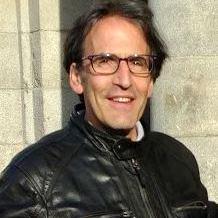
Denis Rothman
Workshop Instructor · April 25, 2026
Denis Rothman is a bestselling AI author with over 30 years of experience in artificial intelligence, agent systems, and optimization. He has authored multiple cutting-edge AI books published by Packt and is renowned for making complex AI architecture concepts practical and immediately applicable. He guides you step by step through building production-ready context-engineered multi-agent systems — answering your questions live throughout the 6-hour session.
Prerequisites
Who Is This Workshop For?
Intermediate to advanced workshop. Solid Python and basic LLM experience required.
→ Intermediate Python — comfortable with classes, functions, and APIs
→ Basic familiarity with LLMs and prompt engineering
→ Some experience calling AI APIs (OpenAI, Anthropic, or similar)
→ Optional: prior experience with LangChain or agent frameworks
Frequently Asked Questions
Common Questions About Building RAG Agent Workflows in Python
Everything you need to know before registering.
What Python components does a RAG agent workflow need? +
A complete Python RAG agent workflow needs: a query understanding component that reformulates natural language queries for optimal retrieval, a retrieval client that queries the vector store with proper connection management, a re-ranking component that improves precision on the top candidates, a citation metadata manager that attaches source information to retrieved content, an LLM generation component that produces citation-grounded outputs, an output validator that checks citation coverage, and an MCP interface that exposes the complete workflow to the orchestrating agent.
How do I structure Python code for a RAG agent workflow? +
Structure the Python RAG agent workflow as a pipeline of composable components: each component is a Python class with a clearly defined input type, output type, and configuration. The pipeline orchestrator passes typed objects between components, making the flow testable and swappable. The workshop covers this component architecture and shows how each class plugs into the overall workflow.
How does the RAG agent workflow handle asynchronous retrieval in Python? +
Async retrieval in Python uses asyncio to run multiple retrieval operations concurrently: querying the vector store and episodic memory simultaneously rather than sequentially, running multiple re-ranking requests in parallel when evaluating several candidate documents, and overlapping the retrieval phase with early document processing. The workshop covers implementing async RAG retrieval without introducing race conditions in the citation metadata.
How do I test a Python RAG agent workflow? +
Testing a Python RAG agent workflow requires mocking the vector store (to test retrieval logic without requiring a live database), mocking the LLM client (to test citation parsing without live generation), and integration tests that verify the complete pipeline with a small test corpus. The workshop covers a pytest-based testing framework for RAG agent workflows that makes each component independently testable.
How does the Python RAG workflow integrate with MCP for multi-agent use? +
The Python RAG workflow integrates with MCP by wrapping the complete pipeline as an MCP server with a retrieval tool that accepts structured query parameters and returns structured results with citation metadata. Other agents in the multi-agent system invoke this MCP service rather than implementing their own retrieval. This centralized RAG service ensures consistent retrieval quality and citation standards across all agents.
Can I use multiple vector stores in a Python RAG agent workflow? +
Yes. The retrieval layer of the Python RAG agent workflow can query multiple vector stores and merge results with appropriate source attribution. This is useful when different document collections are stored in different vector databases or when combining a private knowledge base with a public one. The workshop covers multi-source retrieval with result merging and deduplication.
Context Engineering for Multi-Agent Systems · Cohort 2 · April 25, 2026
Ready to Build Production AI With Context Engineering?
6 hours. Bestselling AI author. Production context-engineered multi-agent system by the end. Seats are limited.