Fix AI Agent Hallucination in Production · April 25

Your AI Agent Is Hallucinating in Production — Here Is the Architectural Fix

AI agent hallucination is not a model quality problem you cannot control. It is an architecture problem you can fix. This live workshop teaches the context engineering techniques that prevent hallucination by design: citation-grounded RAG, semantic blueprint constraints, and output validation safeguards.

Saturday, April 25  9am – 3pm EDT
6 Hours  Hands-on coding
Cohort 2  Intermediate to Advanced

Workshop Details

📅
Date & Time
Saturday, April 25, 2026
9:00am – 3:00pm EDT
Duration
6 Hours · Hands-on
💻
Format
Live Online · Interactive
📚
Level
Intermediate to Advanced
🎓
Includes
Certificate of Completion
Register on Eventbrite →

By Packt Publishing · Refunds up to 10 days before

✦ By Packt Publishing
6 Hours Live Hands-On
Cohort 2 — April 25, 2026
Intermediate to Advanced
Certificate of Completion
Why Trust Packt

Over 20 Years of Helping Developers Build Real Skills

7,500+
Books and video courses published for developers worldwide
108
Live workshops and events hosted on Eventbrite
30+
Years of AI experience from your instructor Denis Rothman
100%
Hands-on — every session involves real code and live building
About This Workshop

Why AI Agent Hallucination Is an Architecture Problem You Can Solve

Agents hallucinate when they generate claims without knowledge grounding, when their context window overflows with irrelevant information, or when there is no output validation layer to catch fabrications before they reach users. Context engineering addresses all three causes structurally.

🧠

What is Context Engineering?

Context engineering is the discipline of designing systems that give AI the right information, in the right format, to reason and act reliably. It goes beyond prompt engineering — building structured, deterministic systems that scale in production.

🤖

What is a Multi-Agent System?

A multi-agent system uses multiple specialised AI agents working together — each with a defined role, context, and tools — to complete complex tasks no single agent could handle reliably. Context engineering makes them predictable.

🔗

What is the Model Context Protocol?

MCP is Anthropic's open standard for connecting AI models to tools, data sources, and other agents. It provides structured agent orchestration with clear context boundaries — making systems transparent and debuggable.

🎯

Why Attend as a Live Workshop?

Context engineering requires hands-on practice to truly understand. This live workshop lets you build a working system with a world-class instructor answering your questions in real time.

Workshop Curriculum

What This 6-Hour Workshop Covers

Six modules. Six hours. A production-ready context-engineered AI system by the time you finish.

01

From Prompts to Semantic Blueprints

Understand why prompts fail at scale and how semantic blueprints give AI structured, goal-driven contextual awareness.

02

Multi-Agent Orchestration With MCP

Design and orchestrate multi-agent workflows using the Model Context Protocol. Build transparent, traceable agent systems.

03

High-Fidelity RAG With Citations

Build RAG pipelines that deliver accurate, cited responses. Engineer memory systems that persist context reliably across agents.

04

The Glass-Box Context Engine

Architect a transparent, explainable context engine where every decision is traceable and debuggable in production.

05

Safeguards and Trust

Implement safeguards against prompt injection and data poisoning. Enforce trust boundaries in multi-agent environments.

06

Production Deployment and Scaling

Deploy your context-engineered system to production. Apply patterns for scaling, monitoring, and reliability.

What You Walk Away With

By the End of This Workshop You Will Have

Concrete working deliverables — not just theory and slides.

A working Glass-Box Context Engine with transparent, traceable reasoning

Multi-agent workflow orchestrated with the Model Context Protocol

High-fidelity RAG pipeline with memory and citations

Safeguards against prompt injection and data poisoning

Reusable architecture patterns for production AI systems

Certificate of completion from Packt Publishing

Your Instructor

Learn From a Bestselling AI Author With 30+ Years of Experience

Denis Rothman brings decades of production AI engineering experience to this live workshop.

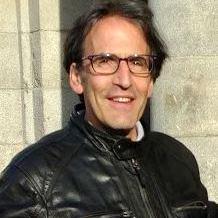
Denis Rothman

Denis Rothman

Workshop Instructor · April 25, 2026

Denis Rothman is a bestselling AI author with over 30 years of experience in artificial intelligence, agent systems, and optimization. He has authored multiple cutting-edge AI books published by Packt and is renowned for making complex AI architecture concepts practical and immediately applicable. He guides you step by step through building production-ready context-engineered multi-agent systems — answering your questions live throughout the 6-hour session.

Prerequisites

Who Is This Workshop For?

This is an intermediate to advanced workshop. Solid Python and basic LLM experience required.

Frequently Asked Questions

Common Questions About Fixing AI Agent Hallucination in Production

Everything you need to know before registering.

What is the most common cause of AI agent hallucination in production? +

The most common cause of production AI agent hallucination is asking agents to generate factual claims without grounding them in retrieved sources. When an agent's context does not contain the information needed to answer a question, it generates a plausible-sounding answer from its training distribution rather than admitting uncertainty. Citation-grounded RAG solves this by requiring every factual claim to reference a retrieved source.

How does citation-grounded RAG prevent AI agent hallucination? +

Citation-grounded RAG requires the agent to attribute every factual claim in its output to a specific retrieved source. If the agent cannot cite a source for a claim, it must flag the claim as uncertain or decline to make it. This structural requirement prevents the confident confabulation that characterizes hallucination. The workshop implements citation tracking at every layer of the RAG pipeline.

What output validation safeguards catch hallucination before it reaches users? +

The workshop covers several output validation safeguards: citation verification (checking that claimed sources exist and support the attributed claim), factual consistency checking between multiple agent outputs, domain constraint validation against the semantic blueprint, and confidence scoring that flags responses with low citation coverage for human review before delivery.

How does the Glass-Box architecture help identify hallucination patterns? +

The Glass-Box logging layer captures every RAG retrieval, citation chain, and output validation result. When hallucination occurs, this log lets you identify the specific context state that triggered it: what information was in the context window, what was retrieved, whether citations were checked, and what validation failed. This pattern analysis lets you improve safeguards systematically rather than reacting to individual incidents.

Can I prevent hallucination in multi-agent systems where agents reference each other's outputs? +

Yes, but it requires citation propagation across the agent chain. When agent B uses a claim from agent A, the citation for that claim must propagate with it so the final output retains the original source attribution. The workshop covers citation chain design for multi-agent systems that ensures hallucination prevention extends across agent boundaries.

What is the acceptable rate of hallucination in production AI agent systems? +

The acceptable hallucination rate depends entirely on the use case and consequences of incorrect information. The context engineering safeguards taught in this workshop aim to make hallucination events visible (through citation coverage metrics), catchable (through output validation), and systematically reducible (through continuous improvement based on Glass-Box data).
Context Engineering for Multi-Agent Systems · Cohort 2 · April 25, 2026

Ready to Build Production AI With Context Engineering?

6 hours. Bestselling AI author. Production context-engineered multi-agent system by the end. Seats are limited.

Register Now →

Saturday April 25 · 9am to 3pm EDT · Online · Packt Publishing · Cohort 2